Practice-Based Innovation and Scaling Teacher Training
Teaching is evolving. Around the world, education systems are moving away from rote learning toward active, reflective, and project-oriented methods. Recent research shows that when teachers practice teaching — not just learn theory — student outcomes improve dramatically (e.g. in project-based learning and active learning settings) (Beckett et al., 2025; Bagheri et al., 2013).
In rural Swabi’s Nabi Village, the Alamabad Project school, supported by Sukh Saanjh Foundation (SSF) and Next-Gen Impact (NGI), just completed a five-day intensive workshop titled “Redesigning Learning & Training: Future-Ready Classrooms Powered by AI, Design Thinking, and Real-world Skills.” The purpose: to move beyond what teachers know about pedagogy, to what they do in their classrooms.
Each day of the training combined theory with hands-on practice:
Parallel to scheduled content, the training adapted in real time. When teachers raised concerns (e.g. about handling failing learners or integrity of lesson planning), extra depth was added. These responsive moments reinforced trust, professional credibility, and relevance.
This training model aligns with what recent global findings suggest:
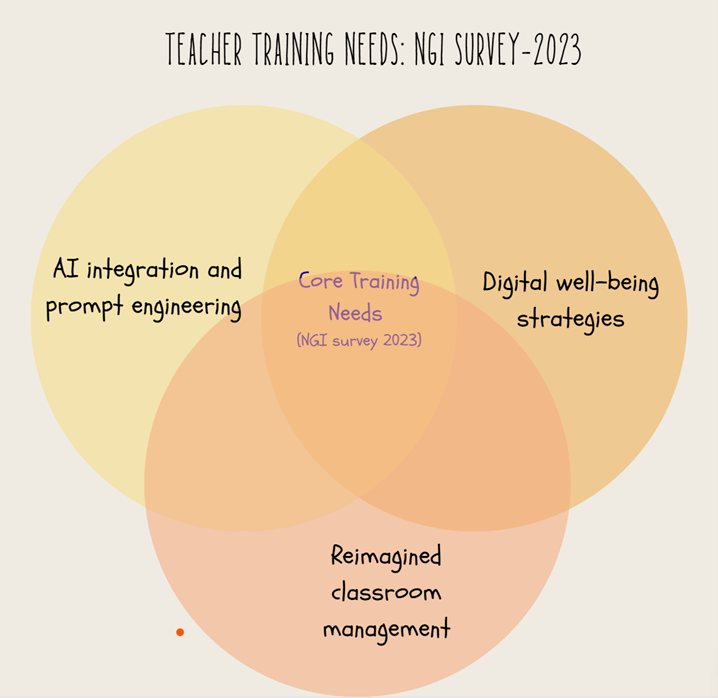
During training and in interactions with the principal and staff, several observations were made:
Strengths:
Gaps:
With its deep expertise in curating training interventions tailored to the unique needs of clients, Next-Gen Impact (NGI) Consulting ensures that capacity-building programs are not only contextually relevant but also future-ready. From integrating AI-powered pedagogical tools to designing structured governance frameworks for schools and educational institutions, NGI has demonstrated how evidence-based approaches can translate into measurable impact. This adaptability and commitment to quality underscore NGI’s position as a trusted partner for organizations seeking sustainable educational transformation.
This model shows promise for other schools and organizations. Here are ways to scale effectively:
Alamabad’s training exemplifies the shift from “knowing what” to “knowing how.” It demonstrates that even in rural areas, with thoughtful design, practice-based teacher education yields rich dividends. Student engagement, teacher skill, and classroom outcomes all benefit when training is lived, not only taught.
This is a model curated by Next-Gen Impact Consulting that can be replicated by NGOs, schools, and districts across KPK and Pakistan at large, for a future where every classroom becomes a laboratory of learning, and every teacher a catalyst for change.
A beacon of excellence in the L&OD consultancy landscape. We bridge the gap between organizational objectives and outcomes through research-based interventions and “Data-Wisdom.”